This changed the way I think about motivation

Tony Robbins said something the other night that I can’t stop thinking about.
In fact, it completely changed the frame of the conversation in less than thirty seconds.
He was speaking with Alex Hormozi — entrepreneur and founder of Acquisition.com — and Alex asked him a question about the tension between duty and enjoyment when trying to make an impact in the world.
Basically:
How do you balance responsibility with actually enjoying your life?
It’s a great question.
I think a lot of us walk through life believing growth has to feel heavy.
Like everything meaningful needs to be carried uphill.
And honestly, I expected Tony to talk about discipline.
Sacrifice.
Hard work.
Obligation.
The usual “success” conversation.
Instead, he redirected the entire idea.
He said, "I don't think about it through the lens of duty at all...
I think about it as opportunity.
Opportunity to contribute.
Opportunity to grow.
Opportunity to help someone.
Opportunity to become more alive."
And then Tony said something else that stuck with me:
"When you see life through obligation, everything feels heavy.
But when you see life through opportunity, energy changes."
That’s the difference between push and pull motivation.
Push is force.
Obligation.
Discipline.
Willpower.
Pressure.
Fear.
Guilt.
Dragging yourself toward a result because you think you have to.
And sometimes that works
For a little while.
When I started my first marketing business over 20 years ago, I lived almost entirely in push mode.
I'd constantly tell myself:
“I’m behind.”
“I’m not enough yet.”
“I need to fix myself.”
But eventually, pushing gets exhausting.
That kind of motivation burns hot,
and then burns out.
But pull is different.
Pull comes from service.
Curiosity.
Meaning.
Connection.
Pull happens when the thing you’re moving toward matters more than the discomfort required to get there.
And the more I thought about it,
the more I realized how true this is for storytelling too.
The people who become powerful storytellers aren’t usually obsessed with performing.
They’re trying to reach someone.
To make another human feel seen.
Less alone.
More understood.
They’re not pushing information at people.
They’re pulling people closer.
That changes everything.
Because when storytelling becomes an act of service instead of performance, you stop asking:
“How do I sound smarter?”
And start asking:
“How do I help this person feel something?”
You stop trying to impress.
And start trying to connect.
And strangely enough —
that’s usually the moment people finally lean in and start listening.
If this is the kind of change you’ve been looking for —
not just becoming a “better speaker,”
but becoming someone people genuinely want to listen to...
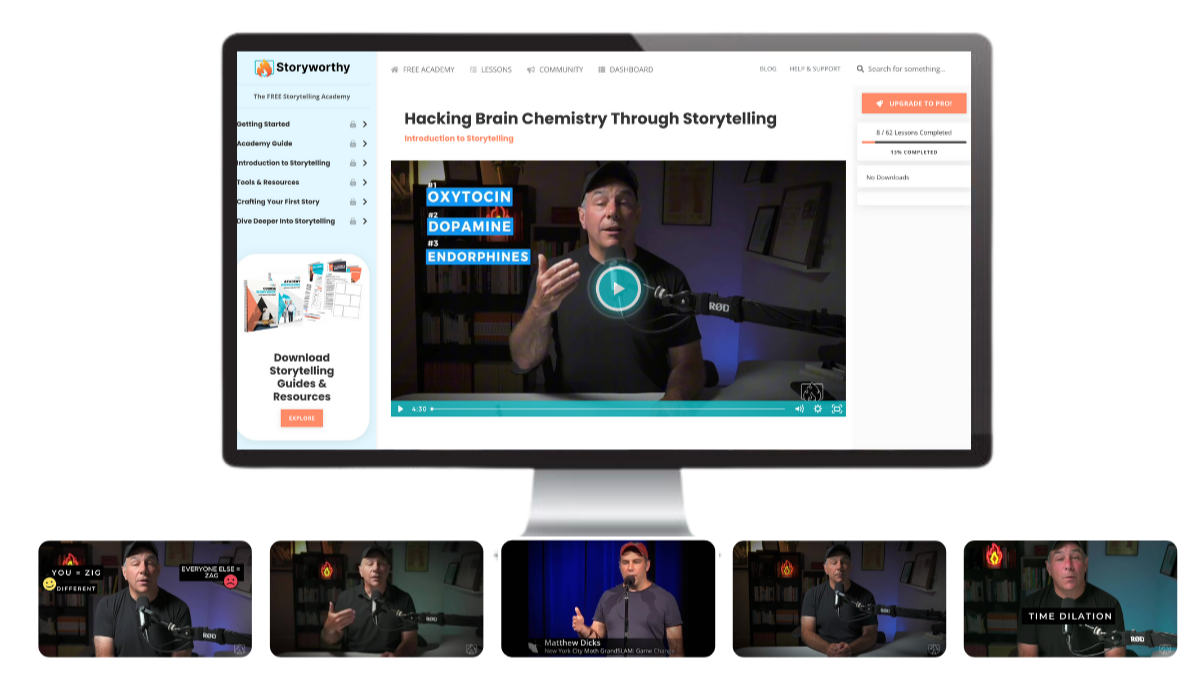
That’s the work we do together inside Storyworthy.
Author: Lionel Kalles
Storyteller · Coach · Marketing Consultant